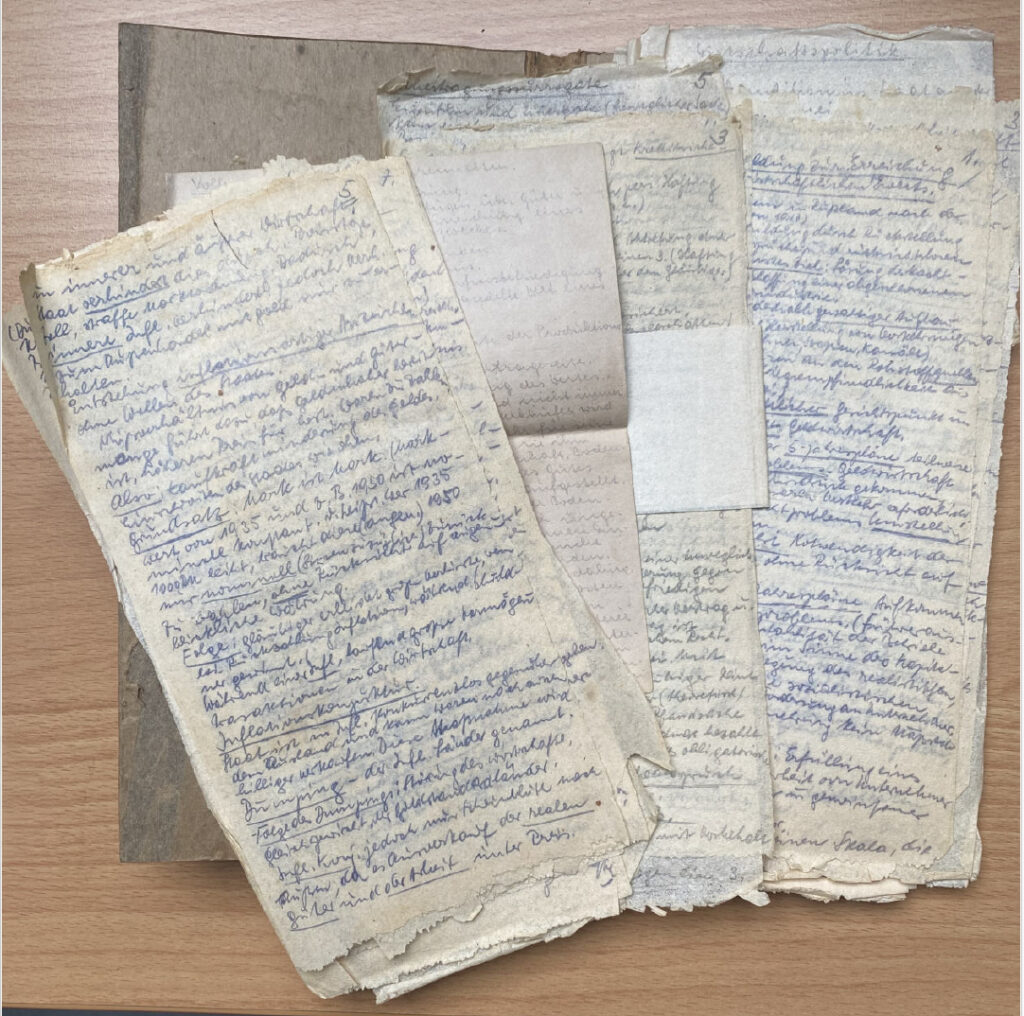
“My father left behind a diary—sometimes written on toilet paper.”
“I have a poem titled *The Bells of Peace Behind the Barbed Wire*.”
“Are there any records that would help me find Oskar, the German prisoner who worked for my grandfather?”
Three messages received in the MUCAP inbox, three personal stories, three ways of examining a captivity that dates back more than 80 years.
A Call for Testimonials, International Responses
Between 2017 and 2026, 137 people responded to our call for testimonials or reached out to our scientific director, Fabien Théofilakis. This corpus reveals a geographic scope that extends well beyond Normandy and the CCPWE19: while interest is concentrated mainly in France, Germany, and the United Kingdom, emails also came from the United States, Canada, Australia, Switzerland, as well as Austria, Slovenia, and Hungary. French, German, and English intermingle within it, reflecting a memory that has become transnational.
Most of the letters concern German soldiers captured at the end of the war and held in France, Great Britain, North Africa, or in American custody. But others recount experiences of captivity that go beyond the scope of the MUCAP’s permanent exhibition: French prisoners in the Reich’s Stalags and Oflags, Italian and Polish soldiers, a Slovenian forcibly conscripted into the Wehrmacht, and a Frenchman held captive by the Japanese. War captivity cannot be reduced to a single nationality, a specific territory, or even a single relationship between victors and vanquished. These diverse experiences will be reflected in the museum’s temporary exhibitions.
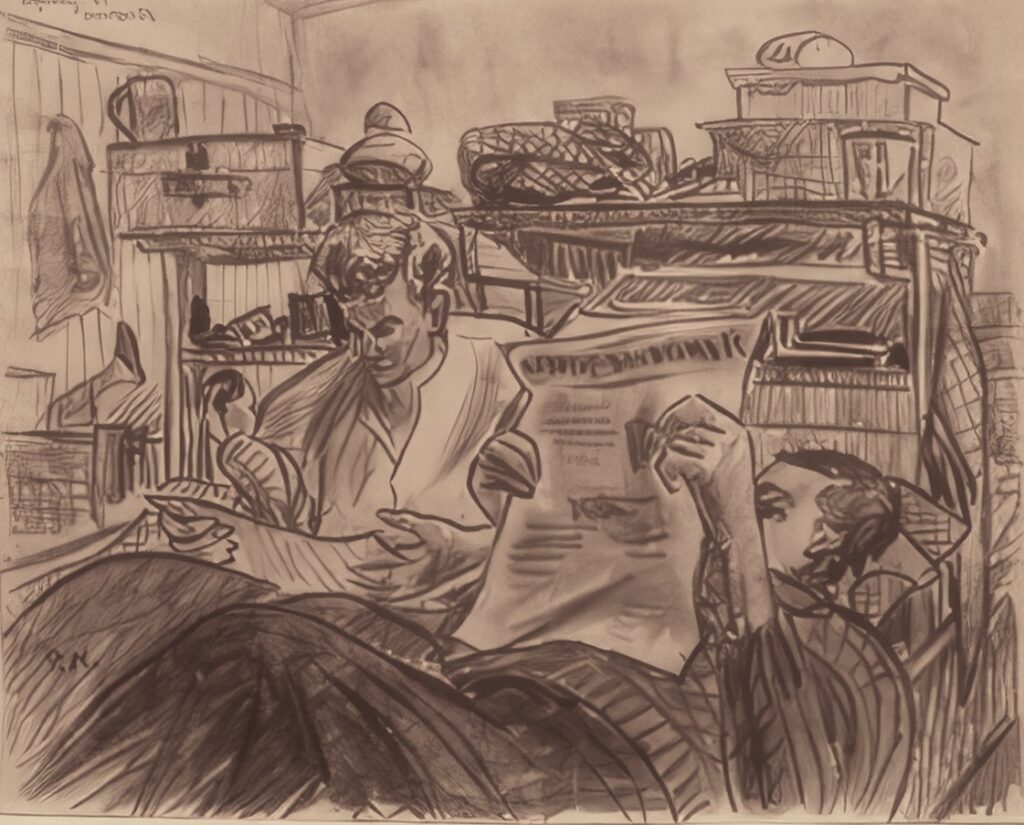
It is mostly children and grandchildren who write to us. Less often, a brother, a nephew, a friend, or a descendant of the family for which a prisoner had worked. Even two or three generations after the events, captivity thus remains a vivid family memory. It is often based on a few sentences heard long ago, on a silence that people now seek to understand, or on a box rediscovered after a death. We have also heard from collectors, researchers, archivists, associations, museums, and local history enthusiasts. These social and scientific expectations are reflected in the strong resurgence of studies on captivity.
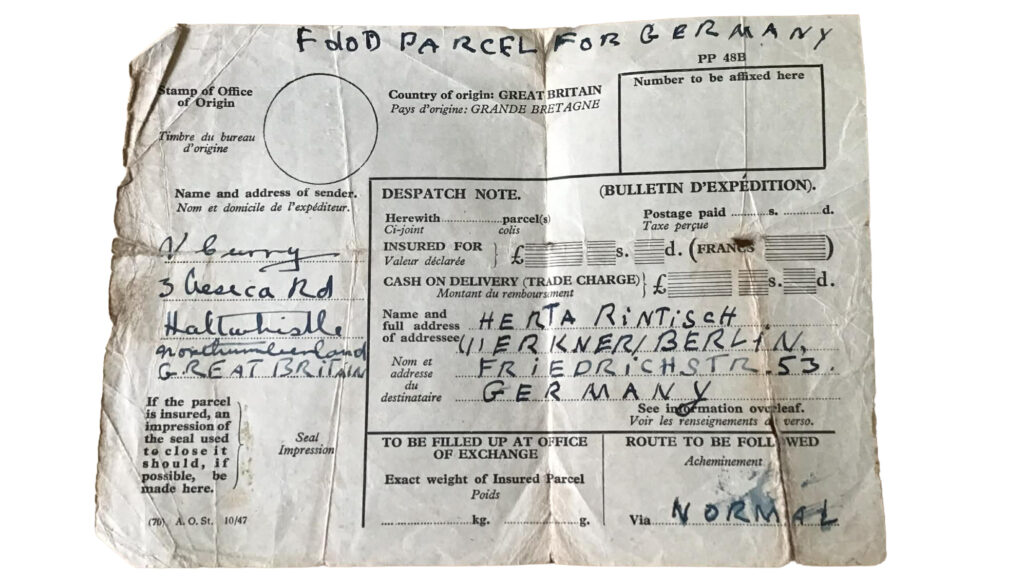
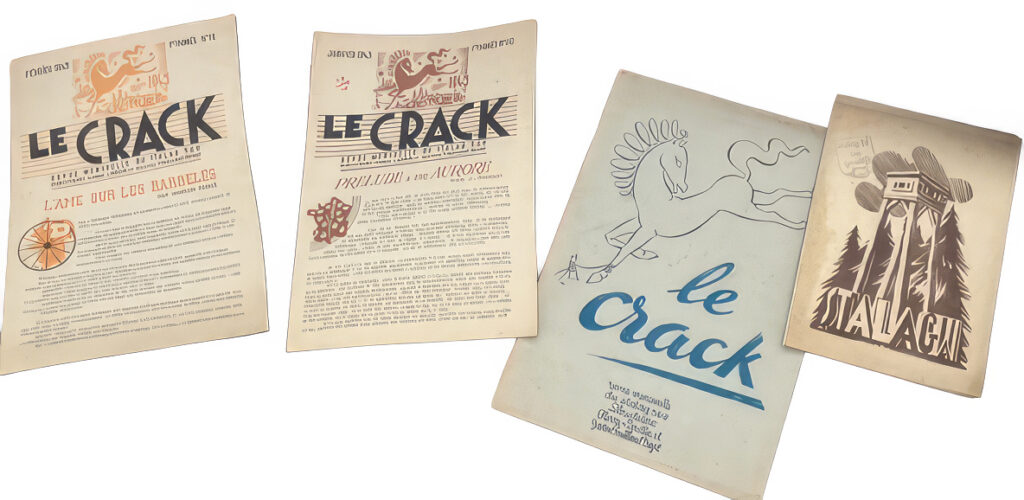
And the documents on display sometimes contain remarkable collections: stories, letters, release certificates, photographs, lists of prisoners, drawings, paintings, coins, camp newspapers, poems, sheet music, theater sets, or objects crafted from almost nothing. Other items convey a memory: an escape, work in a mine or on a farm, a friendship, a package sent to a German family, a rescue, and sometimes a romantic relationship and the search for a child born of that relationship. A human-scale history of captivity, told through objects, which aligns with MUCAP’s curatorial mission.
Three main goals stand out: to preserve, to recover, and to understand.
To preserve archives that families fear will be lost, and to determine whether they can be donated or loaned. To trace the journey of a prisoner, the name of a camp, a labor detail, or a farm, or even to identify the artist behind a drawing. Finally, to understand what a father or grandfather experienced, but also what he did before his capture, without shying away from questions of commitment, coercion, violence, or Nazism. Some letters question the scope of the future museum; one of them questions the chosen focus on German prisoners of war. These reactions are an integral part of the dialogue that MUCAP hopes to foster.
Indeed, the museum meets these expectations by viewing civil society not merely as a future audience, but as a guiding force in its development. Family documents do not merely serve to illustrate a pre-written narrative: they bring to light people, practices, and issues absent from administrative archives. When juxtaposed with one another and placed in context through historical research, they can contribute to the permanent exhibition, temporary exhibitions, educational programs, and new research projects.
MUCAP aims to be a place for preservation, knowledge, transmission, and connection. It is certainly not intended to resolve every family history or trace every name. However, it will be able to preserve records, guide research, bring different perspectives together, and restore these experiences to their rightful place in our shared history. The first 137 messages we’ve received show that this museum is not merely anticipated—it has already begun to come to life through the people who are entrusting us with a part of their history. It will continue to do so with the messages to come.